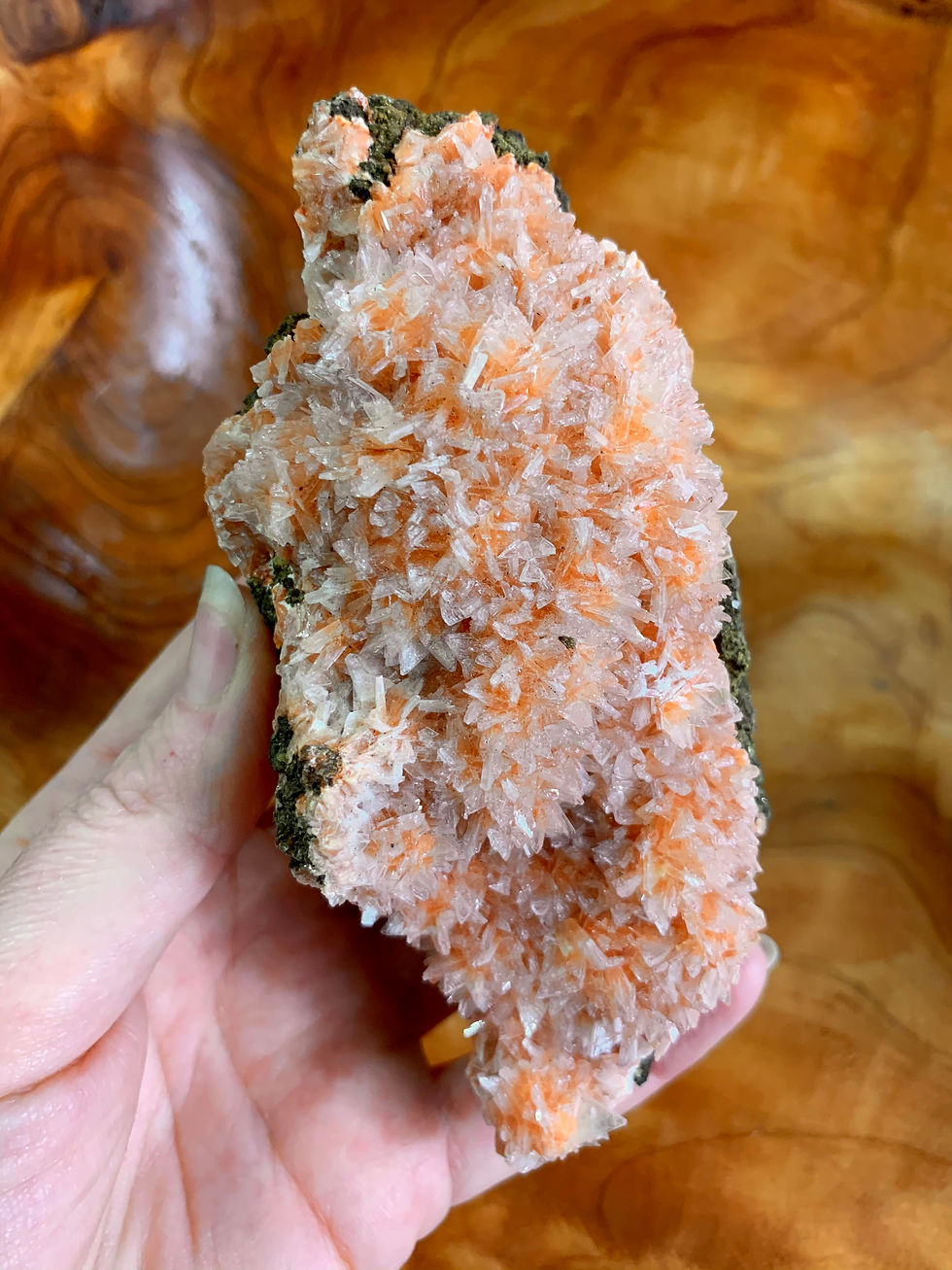
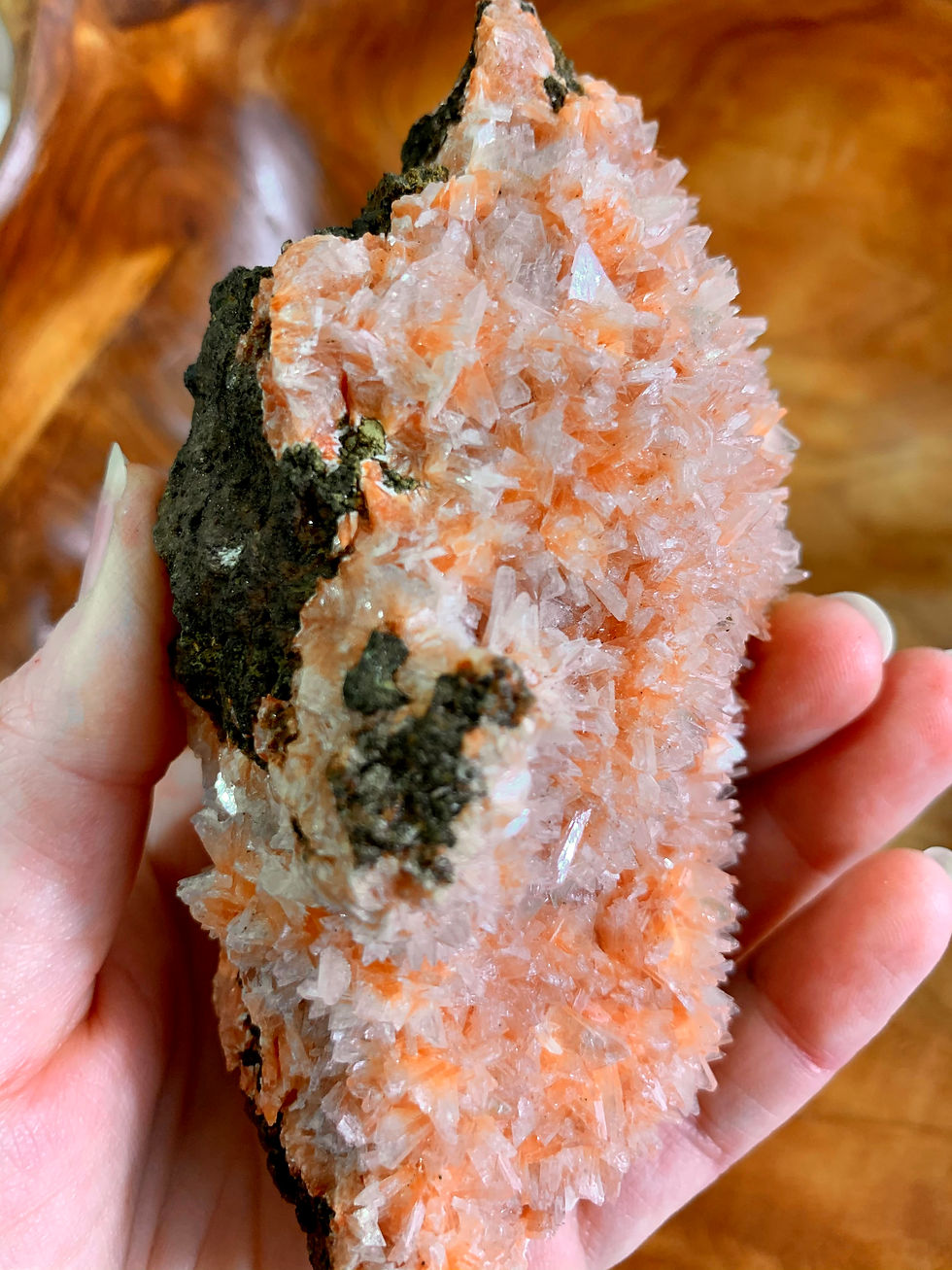
Baryte, Mangano Calcite, and Pyrite Specimen
This specimen has a lovely mix of these three minerals.
2.50" x 1.63" x 1.3"
BARYTE
Baryte, also spelled Barite, can be found in many colors and many locations around the world. Baryte Roses are an unusual formation, and may be confused with Gypsum Desert Roses, although the blades are much larger. It was first named in 1800 after the Greek word for heavy, alluding to its unusual heaviness for a non-metal mineral.
CALCITE
Calcite is found all over the world in a variety of forms and colors, often in combination with other minerals. The more common forms of calcite are orange, blue, green, and yellow. Icelandic spar is a clear double refractive variety that forms natural rhomboids. Mangano calcite is a rare pink variety, with high-quality specimens from Peru displaying pink and white banding. Black Calcite, also known as Shamanite, is another rare variety. Interestingly, calcite and aragonite are identical in chemical makeup but crystalize differently to give us different crystals.
PYRITE
Pyrite is commonly known as Fool’s Gold, due to its metallic brassy color. It gets its name from the Greek Pyr, which means fire; due to the fact that it emits sparks when struck by iron. For this reason, it has been used since ancient times as a fire starting crystal. It has also been popular in jewelry for thousands of years due to its pretty golden appearance. Pyrite can be found in a few different crystal forms, multisided golden clusters commonly called Chispas, flat crystal forms called Pyrite Suns, and beautiful golden cubes most commonly found in Navajun, Spain.